
Top Custom Clothing Manufacturer in China and Vietnam
Custom Clothing Manufacturer in China, Launching or scaling an apparel brand today means answering one make-or-break question early: where — and with whom — will you manufacture? For thousands of emerging and established fashion labels, the answer increasingly points toward Asia’s two apparel powerhouses: China and Vietnam. Together, these two countries produce a staggering share of the world’s clothing, from mass-market basics to premium streetwear, and the brands that source smartly from them gain a real competitive edge in cost, quality, and speed to market.
But “sourcing from Asia” isn’t a single strategy — it’s a decision tree. Do you need China’s unmatched fabric variety and production scale, or Vietnam’s competitive labor costs and duty advantages? Do you need a full production run of 5,000 units, or a small-batch test order of 100? This is exactly where a custom clothing manufacturer in China with cross-border capabilities becomes invaluable.
That’s where ATI Hong Kong comes in. As an established Custom apparel manufacturer in China with an extended production network across Vietnam, ATI Hong Kong bridges both markets under one roof. Whether you’re a startup founder testing a hoodie collection or an established brand needing consistent, large-scale garment manufacturing, ATI Hong Kong offers the flexibility, quality control, and sourcing intelligence that modern apparel brands demand.
In this guide, we’ll break down how China and Vietnam compare as manufacturing bases, what each excels at by product category, and how to choose the right partner for your next production run.
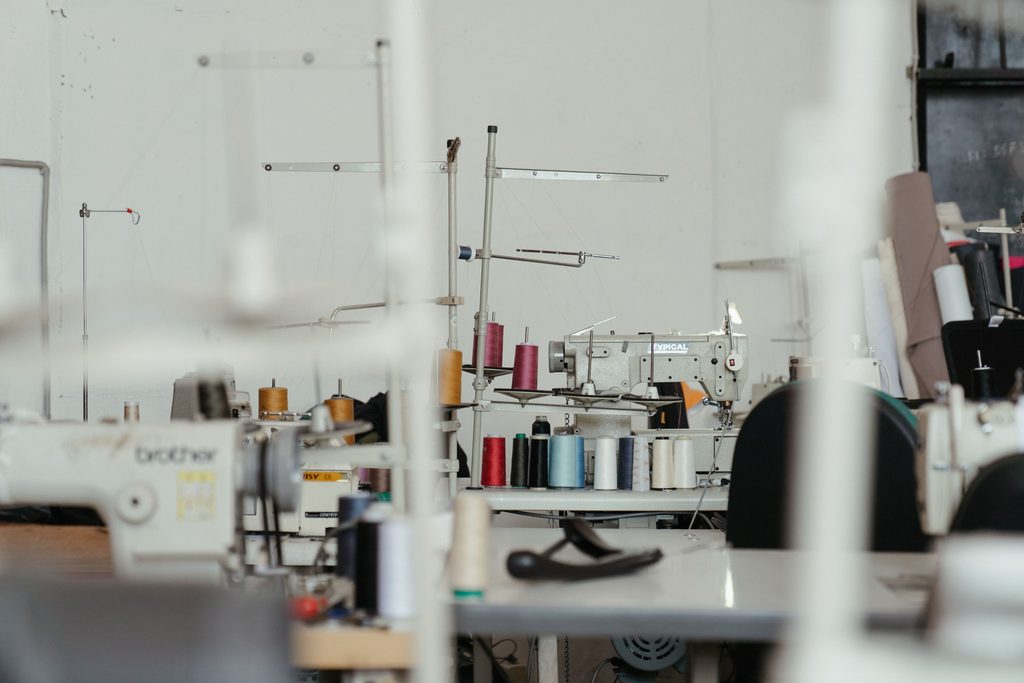
China vs. Vietnam Garment Sourcing: Which Is Right for Your Brand?
Both countries are manufacturing giants, but they serve different strategic needs. Understanding these differences is the first step toward smarter sourcing. Custom clothing manufacturer in China.
Manufacturing Capacity & Infrastructure
Custom Clothing Manufacturer in China remains the world’s most complete apparel supply chain. Decades of infrastructure investment mean that almost every component of a garment — fabric, trims, zippers, labels, packaging — can be sourced within a few hours’ drive of the factory. This vertical integration translates into:
- Faster sampling and prototyping thanks to co-located fabric mills and trim suppliers
- Broader technical capability, including complex constructions, performance fabrics, and specialty finishes
- Scalability for brands needing tens of thousands of units per style
Vietnam, by contrast, has rapidly matured into a manufacturing hub of its own — particularly for brands prioritizing labor cost efficiency and duty advantages under various trade agreements. Clothing manufacturing in Vietnam & China side by side gives brands the best of both: China’s technical depth paired with Vietnam’s cost-competitive, increasingly skilled workforce.
Fabric Sourcing
China’s fabric markets — from Guangzhou to Shaoxing — offer virtually unlimited access to raw materials, in-stock fabrics, and custom-developed textiles. Vietnam sources a meaningful portion of its fabric from China and increasingly develops domestic textile capacity, which is important for brands seeking to optimize country-of-origin rules.
Low MOQs and Small Batch Production
This is where many overseas brands get stuck. Traditional large factories in both countries often require minimum order quantities (MOQs) in the thousands — a nonstarter for new or niche brands. A genuine small batch clothing manufacturer in China, like ATI Hong Kong, solves this by offering:
- Lower MOQ tiers suited to startups and pre-launch testing
- Sample-to-production pipelines that let brands validate designs before committing to volume
- Scalable reorder pathways once a style proves market demand
This flexibility is what separates a genuinely partner-minded manufacturer from a factory that only wants bulk orders.
Product-Specific Manufacturing Expertise
Not every factory is equally skilled across every garment category. Here’s how China and Vietnam stack up by product type — and where ATI Hong Kong’s network delivers the strongest results.
Custom Hoodies & T-Shirts: China vs. Vietnam
Hoodies and tees are the backbone of most streetwear and casual apparel brands, and both countries offer strong capability here.
- A hoodie manufacturer in China typically offers a wider range of fleece weights, brushed-back finishes, and specialty prints (puff, embroidery, appliqué) due to deeper trim and printing supply chains.
- A hoodie manufacturer in Vietnam is often more cost-competitive for simpler constructions and larger production runs, with solid quality on standard fleece and jersey builds.
- For t-shirt manufacturer in Vietnam partnerships specifically, Vietnam’s jersey-knitting capacity and consistent labor quality make it a strong choice for high-volume basics.
Bottom line: if your hoodie or tee design involves complex trims, custom hardware, or intricate decoration, lean toward China. If it’s a clean, high-volume basic, Vietnam often wins on cost.
Pants, Underwear, and Daily Apparel Production
Bottoms and intimates require precision stitching, consistent sizing, and — for underwear especially — strict fabric and hygiene standards.
- A pants manufacturer in Vietnam benefits from the country’s growing denim and woven-fabric expertise, along with competitive labor rates for multi-panel constructions like cargo pants, joggers, and tailored trousers.
- Underwear manufacturers in Vietnam have built a strong reputation in elastic-heavy, technical-fit garments, supported by increasing investment in seamless knitting technology.
- As a broader garment manufacturer Vietnam network, Vietnam-based production is particularly strong for daily-wear essentials — basics that need to be reliably consistent, order after order.
For brands building a full apparel line — hoodies, tees, pants, and underwear under one label — working with a manufacturer that spans both countries eliminates the need to juggle multiple disconnected vendors.
Why Choose ATI Hong Kong as Your Manufacturing Partner
Sourcing overseas is only as good as the partner managing it. ATI Hong Kong positions itself as more than a factory finder — it operates as an embedded extension of your production team, with capabilities built specifically to reduce the risk and friction of overseas manufacturing.
Quality Control at Every Stage Rather than relying on a single final inspection, ATI Hong Kong applies quality checkpoints throughout the process — from raw material verification to in-line production audits to pre-shipment inspection. This layered approach catches issues early, before they become costly reworks or missed deadlines.
Custom Tech Packs & Development Support Many emerging brands don’t arrive with a fully engineered tech pack — and that’s fine. ATI Hong Kong’s development team helps translate design concepts, mood boards, or rough sketches into production-ready specifications, covering measurements, construction details, fabric consumption, and trim callouts.
Supply Chain Efficiency With direct relationships across fabric mills, trim suppliers, and production facilities in both China and Vietnam, ATI Hong Kong can route each order to the factory best suited for that specific product — optimizing for cost, capability, and lead time simultaneously.
Global Logistics Handling Manufacturing is only half the equation; getting product to market reliably is the other. ATI Hong Kong coordinates shipping, customs documentation, and freight logistics so brands aren’t left navigating international trade complexities alone.
Actionable Sourcing Tips for Brands Choosing a Manufacturer
Whether you’re placing your first small-batch order or scaling a proven bestseller, these practical tips will help you source more effectively:
- Start with a clear tech pack (or ask for help building one). Ambiguity in specs is the number one cause of production errors.
- Request physical fabric swatches before committing to bulk. Digital color references rarely match reality.
- Order a pre-production sample, not just a design sample. Pre-production samples reflect the actual factory line and materials.
- Clarify MOQs upfront by product category — hoodies, underwear, and pants often carry different minimums even within the same factory.
- Ask about country-of-origin implications if your target market has specific duty or trade-agreement considerations.
- Build in buffer time for your first order. New style development always takes longer than reorders — plan launch timelines accordingly.
- Treat your manufacturer as a long-term partner, not a one-off vendor. Consistent communication and repeat orders typically unlock better pricing, priority scheduling, and more attentive quality control.
Following these steps — and working with a manufacturer experienced in both small-batch and full-scale production — dramatically reduces the risk of costly missteps during your sourcing journey.
Conclusion: Start Manufacturing Smarter with ATI Hong Kong
Choosing between China and Vietnam doesn’t have to be an either-or decision. The smartest apparel brands today build flexible, dual-country sourcing strategies that draw on China’s technical depth and fabric diversity alongside Vietnam’s cost efficiency and growing manufacturing maturity. Whether you need a custom apparel manufacturer in China for intricate hoodie designs, a reliable garment manufacturer Vietnam partner for daily-wear basics, or a single team capable of managing both, having the right partner makes all the difference.
ATI Hong Kong brings together low-MOQ flexibility, rigorous quality control, custom tech pack development, and end-to-end logistics — all under one roof — so you can focus on growing your brand instead of firefighting production issues.
Ready to bring your apparel line to life? Visit ATI Hong Kong today to request a quote and start a conversation with a sourcing specialist who understands your product, your market, and your growth goals.
Custom Clothing Manufacturer in China
FAQ